
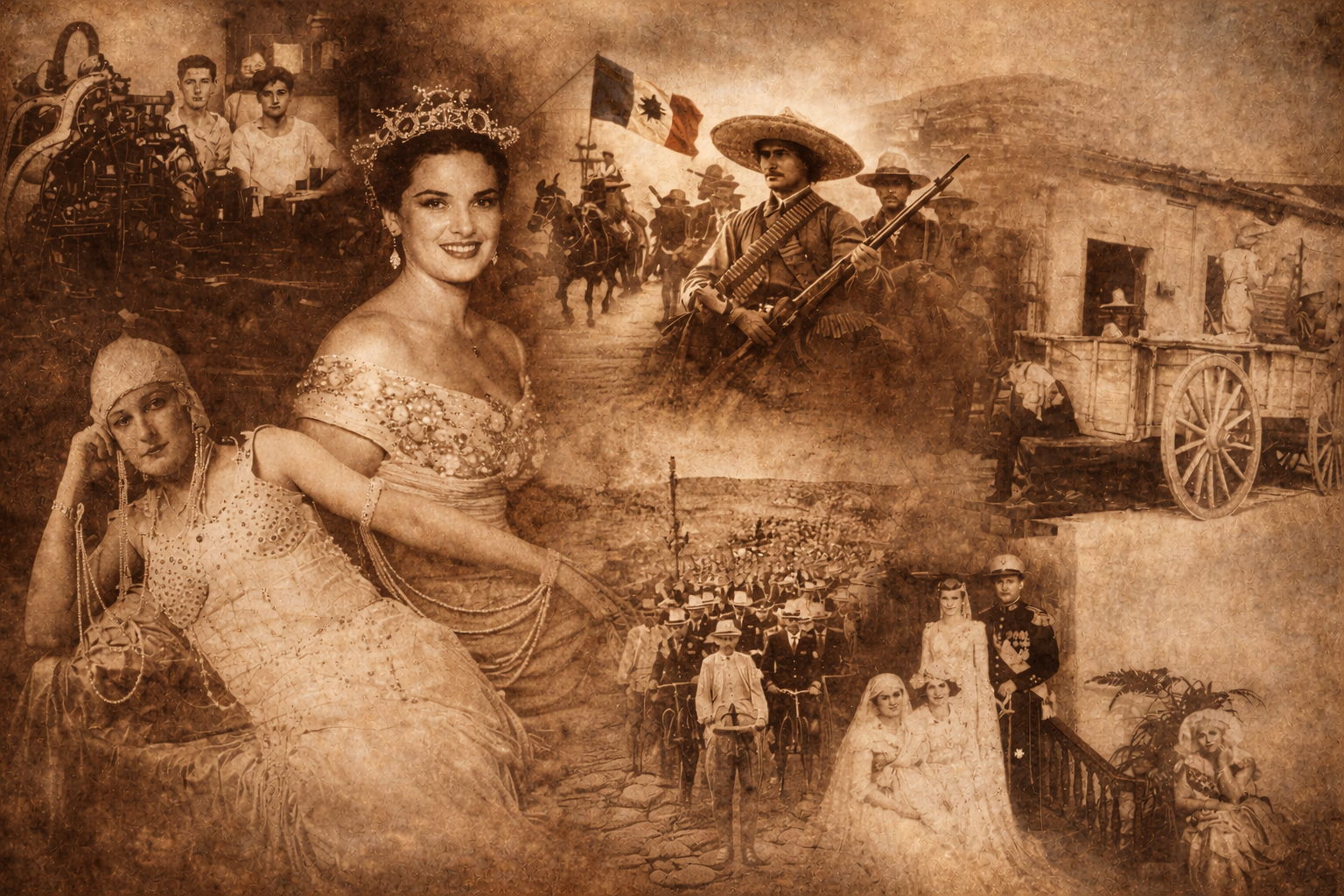
One Hundred Years of Carnival | The Origins (1898–1930)
By Valentina Ramírez | P23 | Part One
Before stadium lights and massive stages, the carnival fit within a single street.
In 1898, Mazatlán was a salt-air port shaped by maritime trade and foreign influence. Steamships arrived with goods and departed with stories. The city was not yet a tourist postcard — it was a commercial enclave with a festive spirit. It was in that meeting point between Europe and the Pacific that the modern Carnival of Mazatlán was born.
It did not begin with protocol.
It began with irreverence.
Early celebrations were vibrant and spontaneous. Men wore improvised masks; women donned imported gowns or dresses sewn at home. Streamers crossed wooden balconies. The celebration was communal and horizontal. There were no VIP sections — there were neighbors.
Spanish and French traditions of pre-Lenten masked balls influenced the festivities, but Mazatlán adapted them. The port infused them with tropical warmth, fireworks, and wind bands.
In the early 20th century, parades and comparsas moved through the historic center, especially around Olas Altas. The music was not yet the thunderous tambora known today; wind ensembles performed polkas, mazurkas, and regional sones. The tuba and clarinet already hinted at what would later define Sinaloa’s musical identity.
Carnival was permission —
permission to suspend hierarchy, to laugh at oneself, to soften the rigidity of everyday life before Lent.
By the 1910s, the celebration became more organized. Committees formed. Programs were designed. The figure of the Carnival Queen emerged as both symbol and narrative — embodying the aesthetic and cultural ideals of the era.
Even during the turbulence of the Mexican Revolution, Carnival endured. Sometimes modest, sometimes scaled down, but never extinguished. It became a symbolic act of resilience.
By the 1920s, modernization reached the port. Commerce expanded, electric lighting transformed night parades, and floats grew more elaborate. The festival gained scale and identity.
Toward the end of the decade, one defining element took shape: the Floral Games. The Natural Flower prize established a unique dual tradition — popular festivity alongside literary ceremony. The Queen and the Poet shared the stage.
Carnival was no longer just spectacle.
It became cultural discourse.
By 1930, the Carnival of Mazatlán had solidified into a structured tradition — with royalty, music, ritual, and calendar permanence.
Between 1898 and 1930, the port did more than organize celebrations. It built identity.
What began as improvised masks became an annual rite. Beneath every queen, every float, every band, the original impulse still beat: the collective need to celebrate life by the sea.