
Chronicle | Fancy Dress Ball | Esteban Flores
By Esteban Flores | Director of El Correo de la Tarde)
MAZATLÁN, SINALOA 1900.
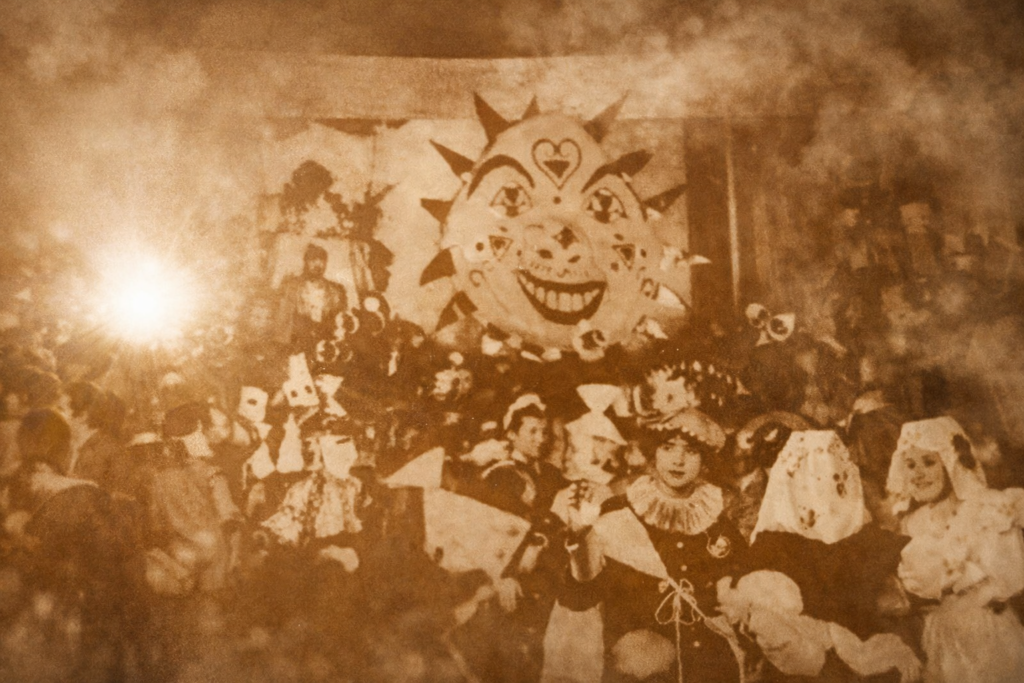
This ball was, in our opinion, the outstanding note of the carnival festivities. The corridors of the Casino were transformed into a beautiful hall decorated with garlands of flowers arranged in artistic bows and crowns, mirrors, flags and masks. The attendance was so numerous that it completely filled every department of the casino, and it was necessary to arrange double rows of seating for the invited families. By eleven at night, all those who wore costumes had gathered. We shall review the costumes: Rosalía Levín displayed a splendid attire as Daughter of the Pharaoh. It was like a fragment of silver-frosted cloud, sculpting the forms of its wearer — that sovereign beauty in whom color and line had lavished their seductions. Celia Retes dressed as a Roman peasant, and her exquisitely finished costume enhanced her serene and chaste beauty. Oh thou, knight of mysterious bearing who crosses the serene wave of the lake in search of a sublime ideal, bring thy poetic little vessel to shore; let the white swan fold its wings — arrive, Lohengrin — and bend the knee before the magical beauty of thy betrothed, that divine Elsa (Catalina Koerdell), for whose temples all crowns have been fashioned. A guitar crossed the hall captivating hearts and winning affections: María Bustamante, lovely maiden of serenely enchanting gaze, true reflection of Hugo’s Esmeralda. Among the most appropriate costumes we must mention those of the beautiful young ladies Laura Hidalgo, María and Emilia Ferreira and Virginia Muro, representing the four seasons. Romana de la Peña dressed as Cleopatra. Her luxurious costume drew the attention of connoisseurs for its resemblance — even in the smallest details — to the legendary model. Romanita possessed all the distinction and majesty of the character she portrayed. Aurelia Cardinault was a spiritual marchioness, escaped from the court of King Louis XIV to evoke in memory the pastoral vestal;”
“It would be impossible to record in this chronicle the names of all who attended the celebration, an impossibility easily understood if one considers that more than 500 persons were gathered in the venue.
The Governor of the state also honored the event with his presence and remained until the late hours of the night. Shortly after midnight, the well-known photographer Donnel took several negatives using magnesium light.”
“But what a lovely shepherdess! Beneath the wings of the white hat that covered her head, simulating dark hair, her sweet face shone illuminated by its radiance. A shepherdess is a flower that hides her beauty in modesty so that admiring glances may not reach her.
The tragic legends of Shakespeare were worthily recalled in the sumptuous festival. We saw Desdemona embodied by Elvira Rivas, whose face of immaculate whiteness, framed by abundant blonde hair, made even more interesting the type she represented. Hortensia Paredes wore the costume of Juliet Capulet and Marina Cardinault that of sweet Ophelia.
Rosario Shober emerged from the flattering world of chimera transformed into a fairy, a smiling sorceress foretelling fortunes; Concha Shober, a spirited she-devil, tempted many admirers who could not help but pay her homage.
Standing out among all was the Carnival Sovereign, Her Majesty Wilfrida Farmer, in her rich costume of Catherine de’ Medici. The young people who attended dressed in fancy attire were the following: Lucas Anaya, Antonio de León and the young Bermúdez brothers also wore costumes.
It would be impossible to record in this chronicle the names of all the persons who attended the celebration, an impossibility easily understood if one considers that more than 500 people were gathered in the venue.
The Governor of the state also honored the event with his presence and remained until the late hours of the night. Shortly after midnight, the well-known photographer Donnel took several negatives using magnesium light.”
Context Note – Magnesium Flash Photography
When Esteban Flores mentions that photographer Donnel “took several negatives using magnesium light,” he is recording an extraordinary technical detail for the time.
In the late 19th and early 20th centuries, night photography relied on something almost theatrical: the combustion of magnesium powder or ribbon. When ignited, magnesium produced an intense, brilliant white burst capable of illuminating large halls for a fraction of a second. It was, quite literally, a chemical lightning strike.
The process involved risk. The photographer had to prepare the mixture in a small tray or special device and ignite it at the precise moment of exposure. The flash generated thick smoke and a distinctive metallic smell. After the burst, the hall would be enveloped in a white cloud while the operator protected the glass plate negative.
That such techniques were used at Mazatlán’s 1900 Carnival speaks of a modern port, connected to European and American technological advances. It was not merely a celebration — it was a stage where modernity appeared in sparks, smoke, and memory fixed on glass.
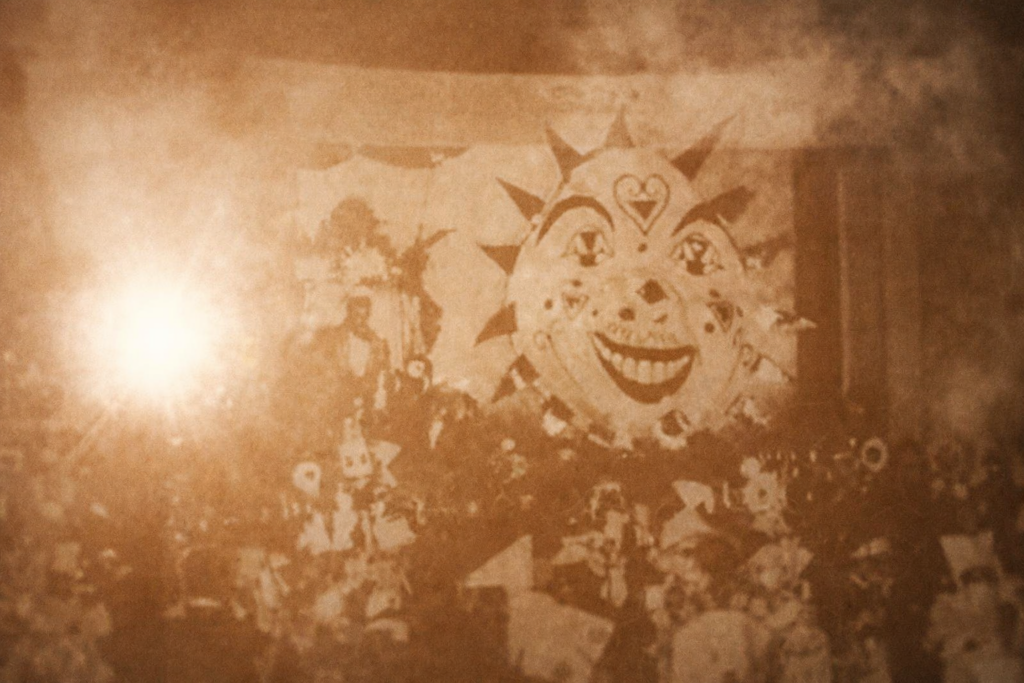
In historical terms, that magnesium flash did not only illuminate fancy costumes; it illuminated Mazatlán’s transition into the twentieth century.