One Hundred Years of Carnival | Between the Charleston, Gunfire, Political Intrigue and Narco Power
By Mario Martini & Valentina Ramírez | P23 | Final Part
As the Mazatlán Carnival moved into its first four decades, southern Sinaloa was burning in an agrarian war that left thousands dead. Between colonels, betrayals, and revenge killings, the celebration never stopped.
The Carnival entered the 1930s with sequins and convertibles, but the country walked on gunpowder.
Mazatlán still breathed modernity. At the beginning of the 20th century, it had been one of the most important ports on Mexico’s Pacific coast. The Revolution left scars, but also a new order. Plutarco Elías Calles, the “Jefe Máximo,” sought to domesticate the revolutionary victors by founding the PNR, while the country searched for stability.
In the 1930s, southern Sinaloa shared in the prosperity of a port that seemed indestructible. Sugar mills, mezcal distilleries, textile factories, active trade, abundant fishing. The region produced wealth—and leadership.
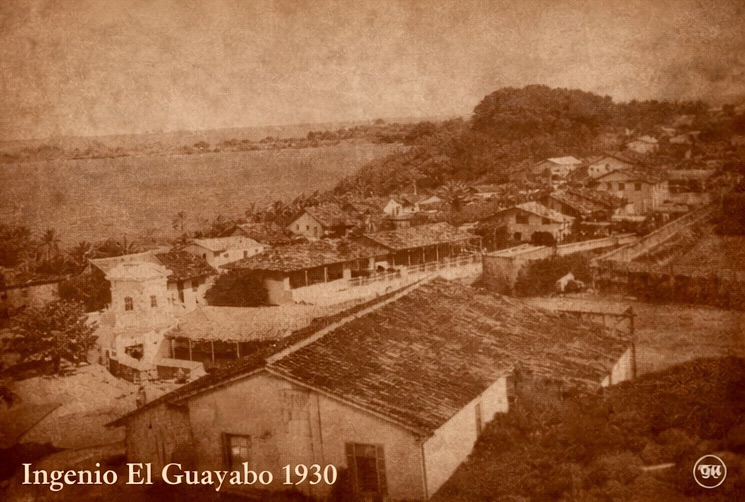
At the port, Cervecería del Pacífico celebrated its first three decades as an inspiring supplier of Carnival. Malt, barley, and hops flowed to the rhythm of the Sinaloan brass band. Society columns recorded excesses as naturally as they described imported gowns.
The Charleston ruled the ballrooms. Mazatlán’s queens competed in beauty and elegance with Hollywood stars. It was no exaggeration: they could have paraded in any world capital.
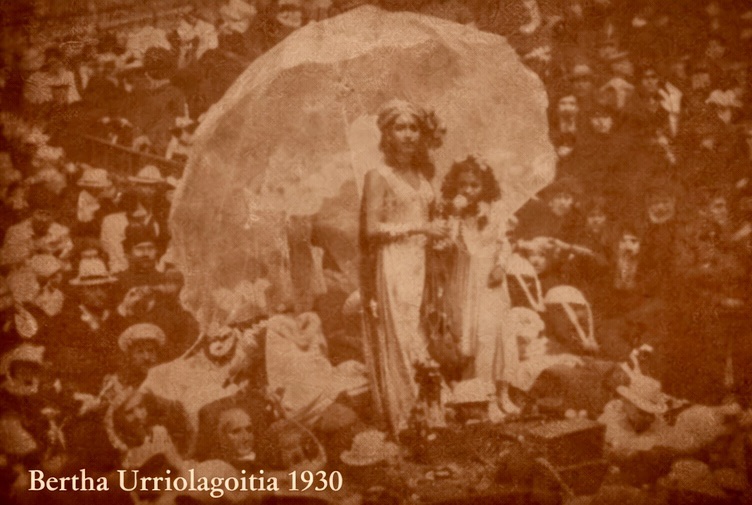
In 1930, Bertha Urriolagoitia opened the parade sheltered by an enormous satin shell—a symbol of a port eager to present itself as sophisticated and cosmopolitan.
But modernity did not erase tension.
Post-revolutionary instability shut down businesses that had once made Mazatlán the leading port of the Mexican Pacific. Power was still negotiated in banquets and train stations.
Between 1930 and 1960, the celebration survived late revolutions, economic adjustments, political assassinations, and shifts in power. It survived because it understood something essential: Carnival is not escapism. It is cultural resistance.
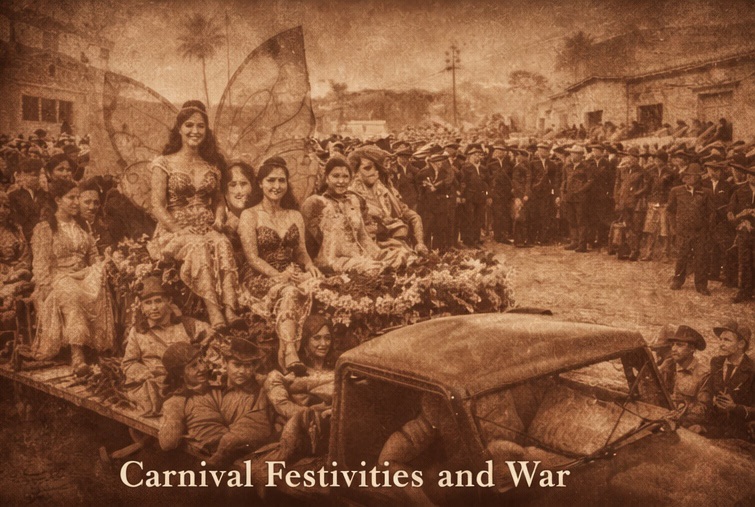
The Grip of La Palma
“The Grip of La Palma” marked a turning point in regional violence. What began as an ambush turned into prolonged war. Thousands of Sinaloans died during that dark chapter. The festival did not disappear, but it became a mirror: celebrating while the land bled outside.
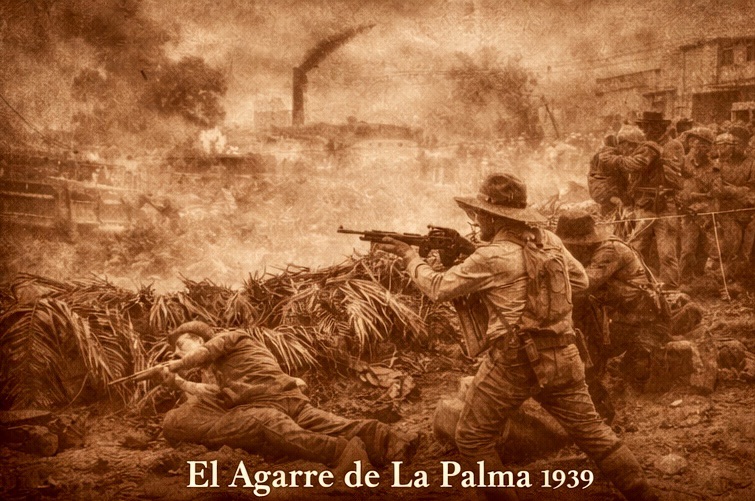
In 1944, on a Carnival Sunday, the Patio Andaluz of the Hotel Belmar became a crime scene. Colonel Rodolfo T. Loaiza was shot in the head. The sound that echoed was not fireworks, but real gunpowder.
The Carnival advanced between parades and resentment.
With Loaiza’s death, the bloodiest chapter in southern Sinaloa closed. Music kept playing. Queens kept parading. The city kept trying to breathe.
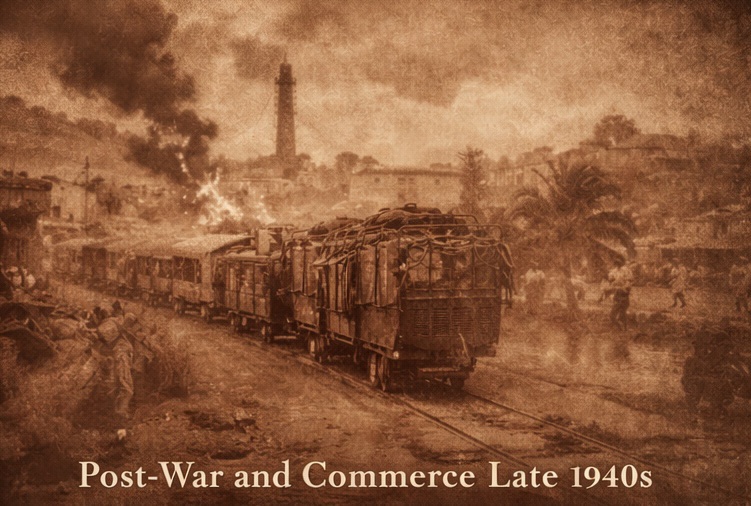
Celebration was not indifference. It was survival.
The 1950s and 1960s: Modernization and Identity
In the 1950s, Carnival regained momentum as a tourist showcase. Floats became more stylized. Queens embodied collective aspiration: beauty, order, brilliance.
The 1960s consolidated a modern image—more sophisticated lighting, formal organization, broader media coverage. Carnival became brand, structured identity, inherited tradition.
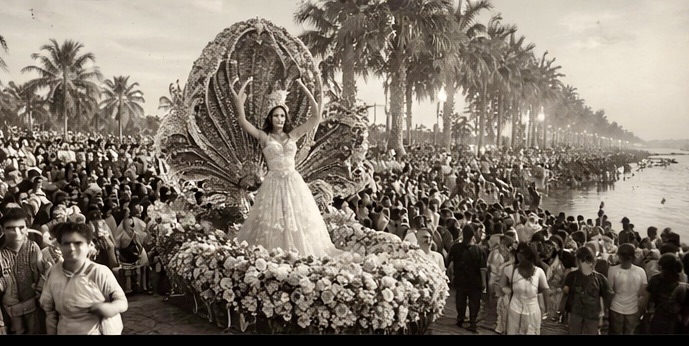
Yet memory does not vanish. Carnival is not only sequins and brass. It is political archive. It is a stage where power is displayed, negotiated—and sometimes broken.
The Long Echo: 1970s–1990s
From the 1960s to the 1990s, Carnival became both celebration and reflection of national tensions. Coronations, literary awards, tourism, and brass bands coexisted with political repression, militarization, and the expansion of narcotrafficking as parallel power.
In 1968, the Tlatelolco massacre marked a generation. Mazatlán continued celebrating, but the national mood shifted.
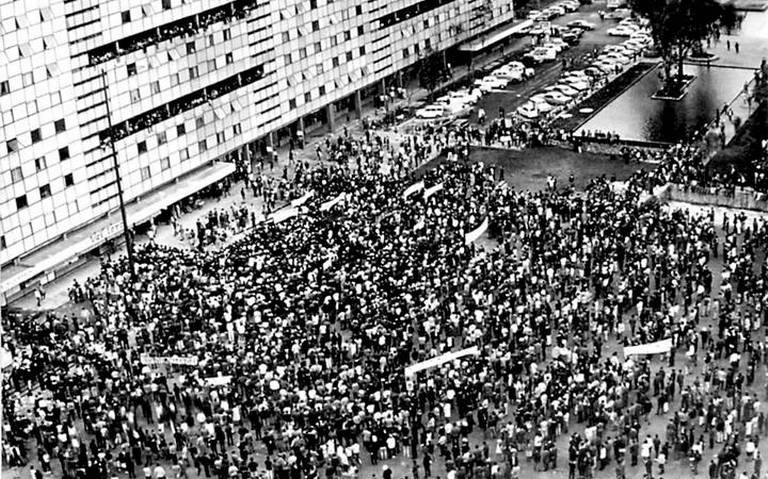
Trafficking routes consolidated in the mountain regions. At first whispers—later structures of power.
Modernization arrived with sponsors, media production, and national celebrities. But illicit money increasingly intertwined with the regional economy. The confetti fell over a port learning to live with both brilliance and shadow.
Television and the National Projection
Then came Raúl Velasco.
His arrival in Mazatlán was strategic. Through Siempre en Domingo, the most influential television show in Mexico for decades, Velasco projected the port’s image to millions of households.
Mazatlán was no longer seen only at Plazuela Machado or along Olas Altas—it was seen on screen.
National television elevated Carnival to international status. What some had once dismissed as a “small-town festival” now competed in spectacle and glamour with major celebrations across the continent.
Nothing would ever be the same.
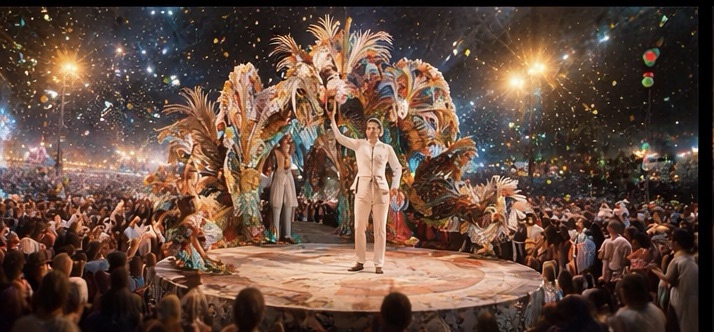
During that era, the Rey Feo was Armando Arce Gordillo, “El Mamucas,” beloved local figure and owner of a renowned seafood restaurant. Velasco also promoted Mazatlán’s gastronomy, understanding that identity is something you taste as much as you watch.
Television, spectacle, and cuisine fused into a new cultural brand: Mazatlán.
1998: The Centennial and the Birth of the Second Century
Under the Centennial motto (1898–1998), the city celebrated one hundred years of organized Carnival history—from the first parade at Plazuela Machado to a globally recognized festival.
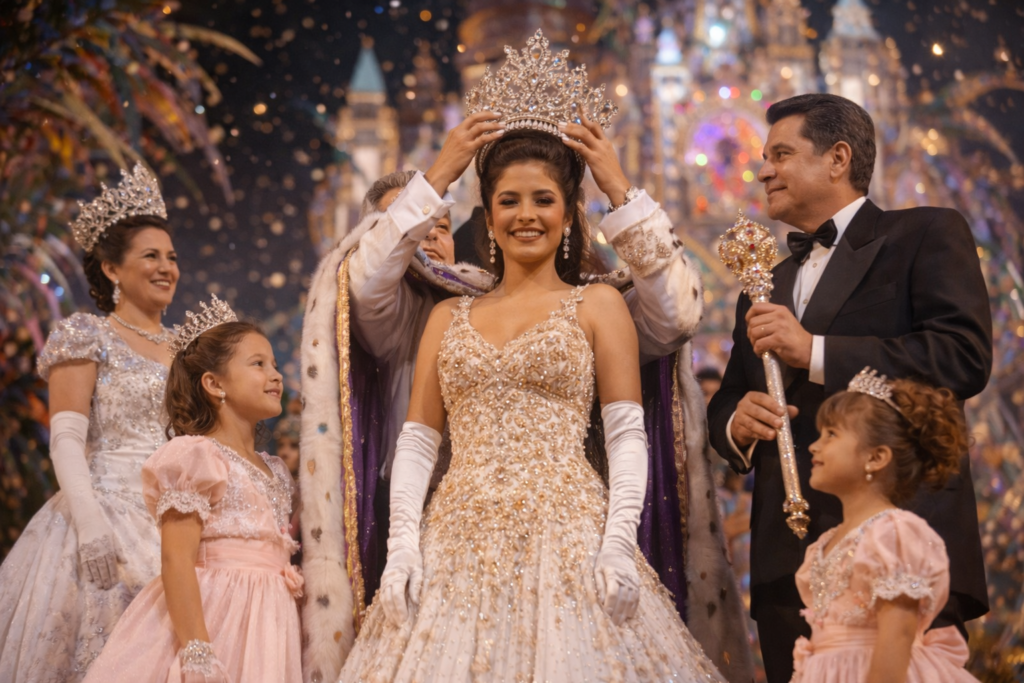
Claudia Yahaira Osuna Chiquete was crowned Queen in that symbolic year. Her reign represented not only youth and beauty, but the continuity of an unbroken lineage of sovereigns who accompanied the port through light and shadow.
The commemorative parade became the visual heart of the Centennial. Royal floats designed by Rigoberto Lewis marked a major aesthetic shift—monumental structures and mobile scenography that reimagined Carnival fantasy with technical ambition. They were not simple decorated platforms; they were moving manifestos of a century of collective imagination.
The literary tradition also reaffirmed itself. The Juegos Florales confirmed what distinguishes Mazatlán from other carnivals: here, brass coexists with poetry.
1998 was not just another edition. It was the exact point where tradition looked into the mirror and recognized itself as centennial.
Mazatlán did not simply celebrate the endurance of a popular festival. It celebrated the survival of an identity.
From flour fights in 1898 to the scenographic spectacle of the new millennium, Carnival proved it could transform without losing its roots.
Crossing into its second century, the port understood something definitive:
Carnival is not a parenthesis in history.
It is history told to the rhythm of brass.
To celebrate is to resist.
To remember is to understand.
Carnival continues—but history demands questions.
The end